Tyres are one of those expenses that sneak up on you — you don’t think about them until you’re standing at a shop paying ₹15,000-20,000 for a full set replacement, wondering if you could’ve stretched their life further. Learning how to increase tyre life genuinely pays off, both financially and in terms of driving safety.
I used to replace my tyres roughly every 30,000 km until a mechanic pointed out my alignment had been off for months — fixing that alone added noticeable extra life to my next set.
Tyre Pressure: The Single Biggest Factor
Knowing how to increase tyre life starts with checking tyre pressure monthly, since under-inflated tyres wear unevenly and can reduce tyre life by up to 25%, while also hurting fuel efficiency.
Correct Pressure Matters More Than People Realize
- Check pressure when tyres are cold, ideally in the morning before driving, for the most accurate reading
- Follow the manufacturer’s recommended pressure, usually found on a sticker inside the driver’s door frame, not the number printed on the tyre itself
- Over-inflation causes center-tread wear, while under-inflation causes edge wear — both reduce overall tyre lifespan
Wheel Alignment and Balancing
Poor alignment causes uneven wear patterns that can noticeably shorten tyre life, sometimes by 20-30% if left unaddressed for extended periods. Getting alignment checked every 8,000-10,000 km, or immediately after hitting a significant pothole, is a smart habit.
Rotation: Don’t Skip It
- Rotating tyres every 8,000-10,000 km helps ensure even wear across all four, since front and rear tyres typically wear differently
- Front-wheel-drive cars in particular see faster front tyre wear without regular rotation
- Most service centers include rotation as part of standard servicing, so it’s worth confirming it’s actually being done
Driving Habits That Wreck Tyre Life
Aggressive acceleration, hard braking, and sharp cornering all accelerate tyre wear significantly compared to smoother, more anticipatory driving. Picture two identical cars driven the same distance — one with an aggressive driving style, one smoother — the difference in tyre life between them can easily be 15,000-20,000 km.
Road Conditions and Their Impact
Indian roads, especially in cities with frequent potholes and uneven surfaces, genuinely accelerate tyre wear compared to smoother highway conditions. Slowing down noticeably over rough patches, rather than powering through, protects both tyres and suspension components. [link to car radiator maintenance guide here]
When to Actually Replace Tyres
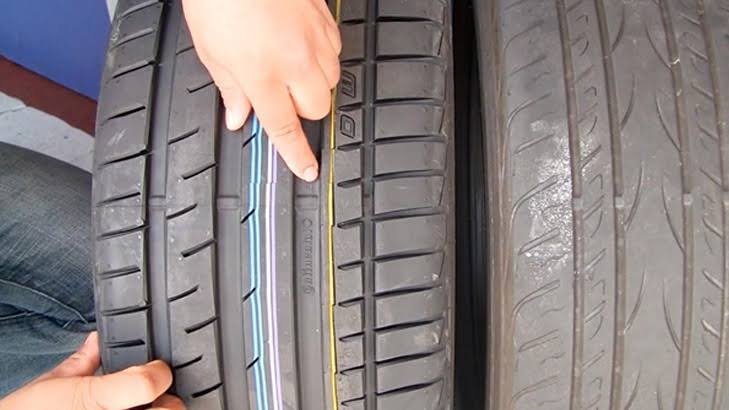
Tread depth below 1.6mm is the legal minimum in most contexts, but for genuine safety, especially in monsoon conditions, replacing around 2-3mm remaining tread is a safer practice. Most tyres also have built-in tread wear indicators — small raised bars within the tread grooves that become flush with the surface as wear progresses.
Storage Tips If You Have Spare Sets
Store spare tyres away from direct sunlight and extreme heat, ideally in a cool, dry place, since UV exposure and heat degrade rubber compounds over time even without actual road use.
FAQ
How often should I check my tyre pressure? Check monthly, and always before long trips, ideally when tyres are cold for the most accurate reading.
Does wheel alignment really affect tyre life? Yes, significantly — poor alignment can reduce tyre life by 20-30% due to uneven wear patterns developing over time.
How often should tyres be rotated? Every 8,000-10,000 km is generally recommended to ensure even wear across all four tyres, particularly important for front-wheel-drive vehicles.
What tread depth means my tyres need replacing? While 1.6mm is the legal minimum in most contexts, replacing around 2-3mm remaining tread is safer, especially for monsoon driving conditions.
Does aggressive driving really reduce tyre lifespan significantly? Yes, aggressive acceleration, hard braking, and sharp cornering can reduce tyre life by 15,000-20,000 km compared to smoother driving habits.
Conclusion
Learning how to increase tyre life through simple, consistent habits — correct pressure, regular alignment checks, and smoother driving — genuinely saves real money over your vehicle’s lifetime. Check your tyre pressure this week if you haven’t recently; it’s a two-minute habit with a surprisingly big payoff.