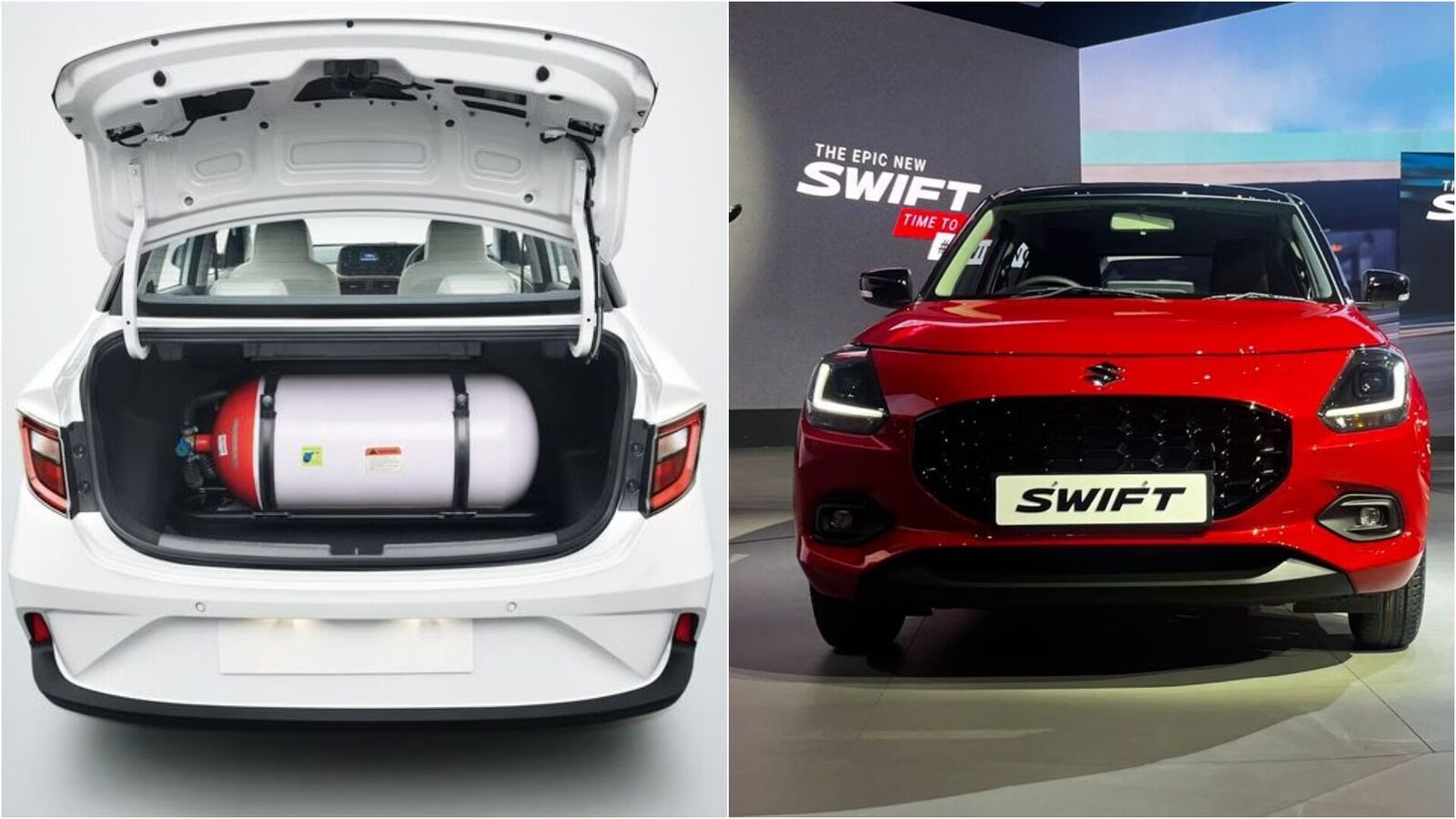
With petrol prices refusing to drop and CNG infrastructure expanding across most Indian cities, this question comes up constantly among first-time car buyers. This petrol vs CNG car comparison breaks down the real trade-offs, not just the obvious fuel cost difference everyone already knows about.
I switched a family car to CNG a few years back, and while the fuel savings were real, there were a few compromises nobody warned me about upfront.
The Fuel Cost Difference
A petrol vs CNG car comparison on running cost alone heavily favors CNG, which typically costs 40-50% less per kilometer than petrol, based on current fuel prices in most Indian cities.
Performance Trade-offs
- CNG cars generally lose about 8-10% power output compared to running on pure petrol
- Acceleration feels noticeably softer in CNG mode, especially during overtaking on highways
- Petrol mode remains available in all factory-fitted CNG cars, giving you flexibility when power matters more than economy
Honestly, the power loss is more noticeable in city traffic when merging quickly than during steady highway cruising, where you barely notice the difference.
Boot Space Compromise
This is the trade-off people underestimate most. The CNG cylinder typically eats up 90-100 litres of boot space, which matters a lot if you’re someone who travels with a lot of luggage regularly.
Running Cost Comparison Over 5 Years
Assuming 15,000 km driven annually:
- Petrol-only: roughly ₹6-7 lakh in fuel costs over 5 years, depending on the car’s mileage
- Factory-fitted CNG: roughly ₹3.5-4 lakh over the same period, a genuine saving of ₹2.5-3 lakh
- Additional CNG maintenance: budget roughly ₹5,000-8,000 extra annually for cylinder-related servicing
That’s a significant enough difference that it genuinely changes the total cost of ownership calculation for most families.
Factory-Fitted vs Aftermarket CNG
Always choose factory-fitted CNG if buying new — it comes with proper safety certification, better tuning, and manufacturer warranty coverage. Aftermarket kits are cheaper upfront but come with real safety and reliability risks that aren’t worth the savings.
Safety Considerations
Factory-fitted CNG systems undergo rigorous safety testing and include automatic cut-off systems in case of leaks. Has this concern ever stopped you from considering CNG? It’s a valid worry, but modern factory-fitted systems have genuinely addressed most of the historical safety issues associated with older aftermarket kits.
Resale Value Impact
CNG cars generally have slightly lower resale value than pure petrol variants, partly due to buyer perception around cylinder wear and reduced cabin space, even though the actual mechanical reliability is comparable. [link to fuel efficient petrol cars guide here]
Who Should Choose CNG
If your monthly running exceeds 1,200-1,500 km, CNG’s fuel savings pay off the price premium relatively quickly, typically within 12-18 months of ownership.
FAQ
Is CNG cheaper than petrol in the long run? Yes, CNG typically costs 40-50% less per kilometer than petrol, making it significantly cheaper over the vehicle’s lifetime for high-mileage drivers.
Does CNG reduce a car’s performance significantly? Yes, expect roughly 8-10% less power output on CNG compared to petrol, most noticeable during quick acceleration and overtaking.
Is factory-fitted CNG safer than aftermarket kits? Yes, factory-fitted systems undergo rigorous safety certification and include better safety features like automatic cut-off systems, unlike many aftermarket kits.
How much boot space does a CNG cylinder take up? Typically around 90-100 litres, which is a significant consideration if you regularly travel with substantial luggage.
Is CNG worth it for low-mileage drivers? Not really — if you’re driving under 800-1000 km monthly, the fuel savings may not justify the higher upfront cost and boot space compromise.
Conclusion
This petrol vs CNG car comparison ultimately comes down to your monthly driving distance — high-mileage drivers benefit significantly, while occasional drivers may not see the trade-offs pay off. Calculate your actual monthly running before deciding, and always insist on factory-fitted CNG over aftermarket if you do go that route.