Every family road trip seems to hit the same wall — the boot’s full, the back seat’s full, and someone’s suitcase is now sitting on someone else’s lap. This is exactly where a good best car roof carrier earns its keep, and honestly, it’s one of the most underrated road trip accessories out there.
I rented one for a long trip to Udaipur a couple of years ago and genuinely wondered why I hadn’t bought one sooner — the extra space changed the entire trip’s comfort level.
Types of Roof Carriers
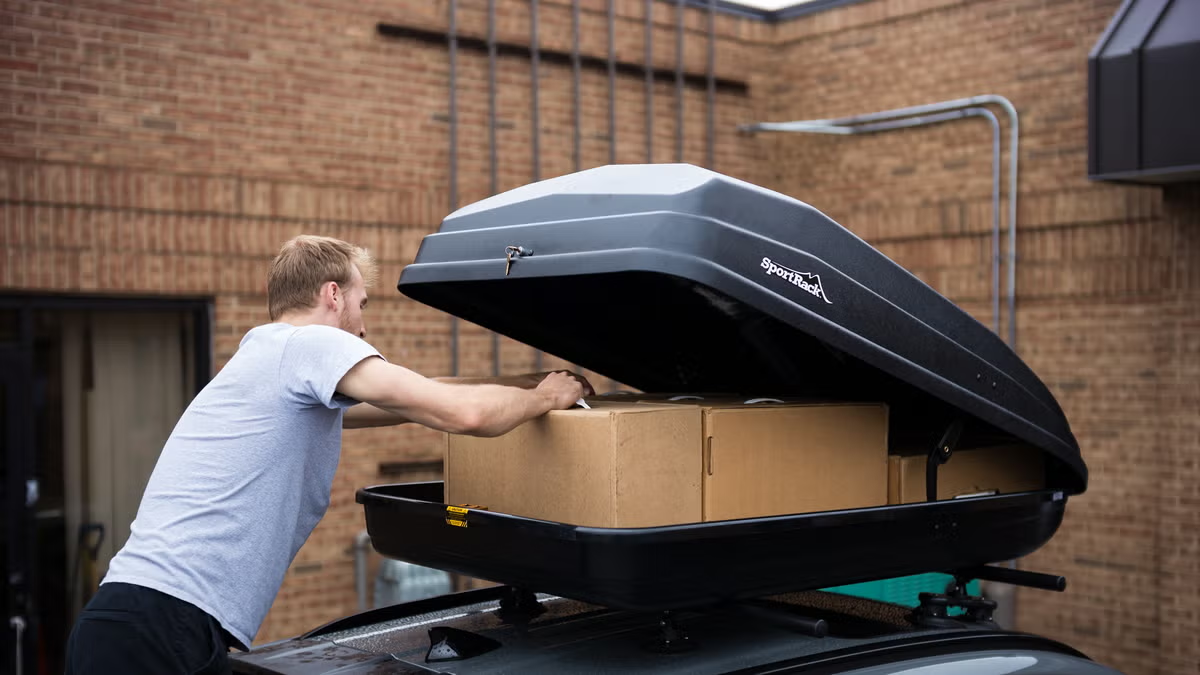
A best car roof carrier generally falls into two categories — hard-shell roof boxes and soft carrier bags, each with distinct trade-offs worth understanding before buying.
Hard-Shell Roof Boxes: Pros and Cons
- Better weatherproofing, genuinely keeps luggage dry even in heavy monsoon rain
- More secure, harder to tamper with or break into during stops
- Aerodynamically shaped, so less impact on fuel efficiency and wind noise compared to boxy alternatives
- Downside: bulkier to store when not in use, and pricier upfront
Soft Carrier Bags: Pros and Cons
Soft bags are cheaper, foldable for easy storage, and easier to fit on cars without existing roof rails. The trade-off is less weatherproofing, and they’re generally less secure against theft during overnight stops.
What to Check Before Buying
- Weight capacity — most roof boxes handle 50-75 kg, verify against your car’s specific roof load rating
- Compatibility with your car’s roof rail system, since not all carriers fit all vehicles universally
- Locking mechanism quality if you’re buying a hard-shell box, for both security and secure closure during transit
- Aerodynamic design, which genuinely affects fuel consumption on longer highway stretches
Installation Tips
Always double-check the mounting is secure before setting off — a roof carrier that shifts or comes loose at highway speed is a genuine safety hazard, not just an inconvenience. Most carriers take 15-20 minutes to install properly the first time, faster with practice.
Picture a family loading up for a Jaipur to Manali road trip, only realizing at the first fuel stop that the carrier straps had loosened slightly from initial installation — always do a quick re-check after the first 20-30 km of driving.
Fuel Efficiency Impact
Roof carriers do increase wind resistance, typically reducing highway mileage by 5-10% depending on the carrier’s shape and your driving speed. It’s a worthwhile trade-off for the extra space on long trips, but worth factoring into your fuel budget. [link to most fuel efficient petrol cars guide here]
Budget Expectations
Soft carrier bags start around ₹2,500-4,000, while hard-shell roof boxes range from ₹8,000-25,000 depending on capacity and brand quality. Renting one for occasional trips, where available, can also make more financial sense than buying if you only travel long-distance once or twice a year.
FAQ
Is a hard-shell roof box better than a soft carrier bag? Generally yes for weatherproofing and security, though soft bags are more affordable and easier to store when not in use.
How much weight can a car roof carrier hold? Most roof carriers handle 50-75 kg, but always check your specific car’s roof load rating before loading close to that limit.
Does a roof carrier reduce fuel efficiency? Yes, typically by 5-10% on highway driving due to increased wind resistance, though the exact impact depends on carrier shape and speed.
Do I need roof rails to install a roof carrier? Most hard-shell boxes require existing roof rails or crossbars, while some soft bags can be strapped directly through door frames on cars without rails.
Is it worth renting a roof carrier instead of buying one? If you only take long trips once or twice a year, renting can be more cost-effective than the upfront cost of buying a hard-shell box.
Conclusion
A good best car roof carrier genuinely transforms long family road trips from cramped and stressful to comfortable and organized. Whether you go hard-shell or soft bag depends on your budget and how often you actually travel long-distance — either way, double-check the mounting security before every trip.