Brakes aren’t something you want to gamble on, yet so many drivers and riders push replacement further than they should, purely to save a service bill. Knowing exactly when to replace brake pads isn’t guesswork — there are clear signs if you know what to look for.
A friend of mine drove nearly 5,000 km past the point his brakes should’ve been changed, purely because “they still worked fine.” They did, until they suddenly didn’t stop as sharply during an emergency braking situation. Scary moment, entirely avoidable.
General Mileage Benchmarks
For cars, front brake pads typically last 25,000-40,000 km, while rear pads often last longer, around 40,000-60,000 km, due to less braking load on the rear wheels.
Knowing exactly when to replace brake pads depends more on wear indicators and driving conditions than a fixed mileage number, since city stop-start driving wears pads noticeably faster than highway cruising.
Warning Signs You Shouldn’t Ignore
- A high-pitched squealing noise while braking, often from a built-in wear indicator designed to alert you
- Reduced braking responsiveness, needing to press the pedal or lever noticeably harder than before
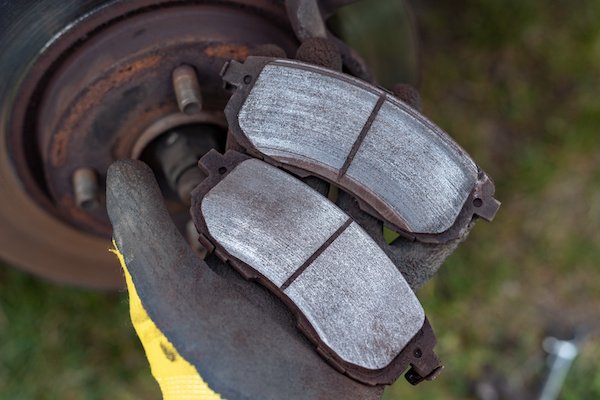
- Visible thinning of the pad material, under 3mm thickness generally means replacement is due soon
- Vibration or pulsing through the brake pedal, which can indicate uneven pad wear or a warped disc
Driving Style Affects Pad Life Significantly
Aggressive braking, especially frequent hard stops in heavy traffic, wears pads considerably faster than smooth, anticipatory braking. I’ve noticed my own brake pads last noticeably longer since I started braking earlier and more gradually in traffic, rather than last-second hard stops.
For Bikes: Slightly Different Timeline
Bike brake pads generally need replacement every 15,000-20,000 km for the front, and slightly longer for the rear, though this varies significantly based on riding style and terrain.
- City riding with frequent stop-start traffic wears pads faster than highway riding
- Riders who use the front brake heavily (which is more effective) will see faster front pad wear
- Monsoon riding accelerates wear slightly due to constant wet-brake cycles
Cost of Replacement
Car brake pad replacement typically costs ₹1,500-4,000 per axle depending on the vehicle and pad quality, while bike brake pads cost considerably less, usually ₹300-800 per set. [link to engine overheating guide here]
Should You Replace Pads and Discs Together?
Not always necessary. If the disc surface is still smooth without deep grooves, just replacing pads is fine. But if pads were neglected for too long and started grinding metal-on-metal, the disc likely needs resurfacing or replacement too — which is exactly why catching worn pads early matters.
DIY vs Professional Replacement
Brake work is one area where I’d genuinely recommend against DIY unless you’re mechanically experienced and confident. A poorly installed brake pad is a serious safety risk — the labor cost savings simply aren’t worth that gamble.
FAQ
How many kilometers do brake pads typically last? Car front brake pads usually last 25,000-40,000 km, while bike brake pads typically last 15,000-20,000 km, though this varies with driving style.
What noise indicates worn brake pads? A high-pitched squealing sound while braking usually indicates a built-in wear indicator alerting you that replacement is due soon.
Does aggressive braking wear out pads faster? Yes, frequent hard braking significantly accelerates pad wear compared to smooth, gradual, anticipatory braking in traffic.
Should I replace brake discs along with pads? Only if the disc surface shows deep grooves or damage from prolonged pad neglect; otherwise, replacing just the pads is usually sufficient.
How much does brake pad replacement cost in India? Car brake pads typically cost ₹1,500-4,000 per axle, while bike brake pads cost around ₹300-800 per set, depending on quality and brand.
Conclusion
Knowing when to replace brake pads and actually acting on those warning signs promptly is one of the most important safety habits any driver or rider can maintain. Don’t wait for squealing to become grinding — get your brakes checked at every regular service, and don’t skip it just because they “still feel fine.”